Collect
AeroT Field Device
Raspberry Pi 5, SDRs, GPS, health telemetry, local persistence, XBee transport, and hotspot support.
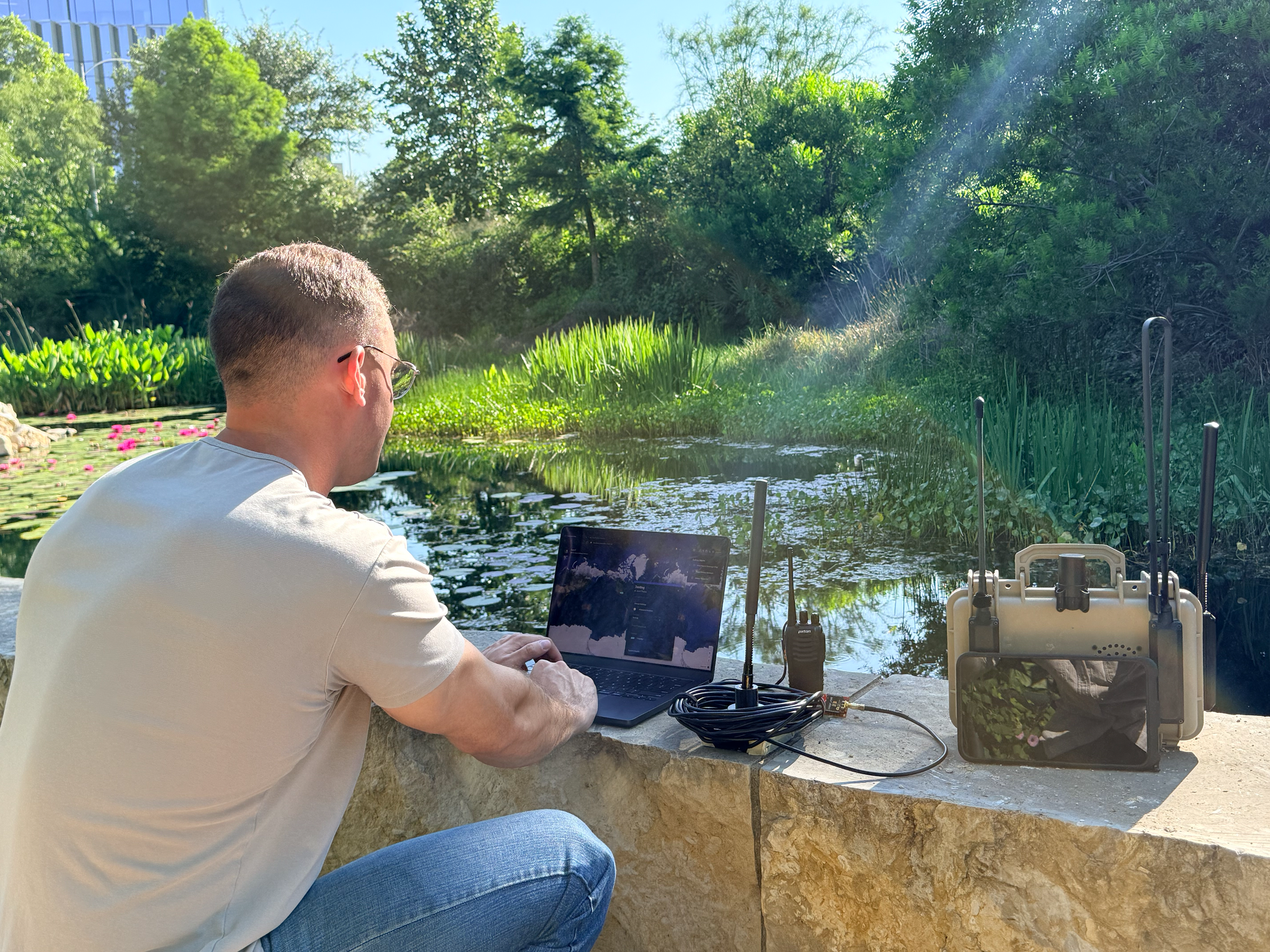
All-Domain Electromagnetic Radio Operator Trainer Tool
A COTS-based RF training system that compressed electromagnetic discipline feedback from delayed after-action review into near-real-time terrain-aware instruction.
December 2024 to MVP delivery

AeroT came together through close collaboration between engineering, product, stakeholder leadership, and field validation.

Senior Software Engineer / Project Lead
Led the product, engineering, RF workflow, and field validation across AeroT.
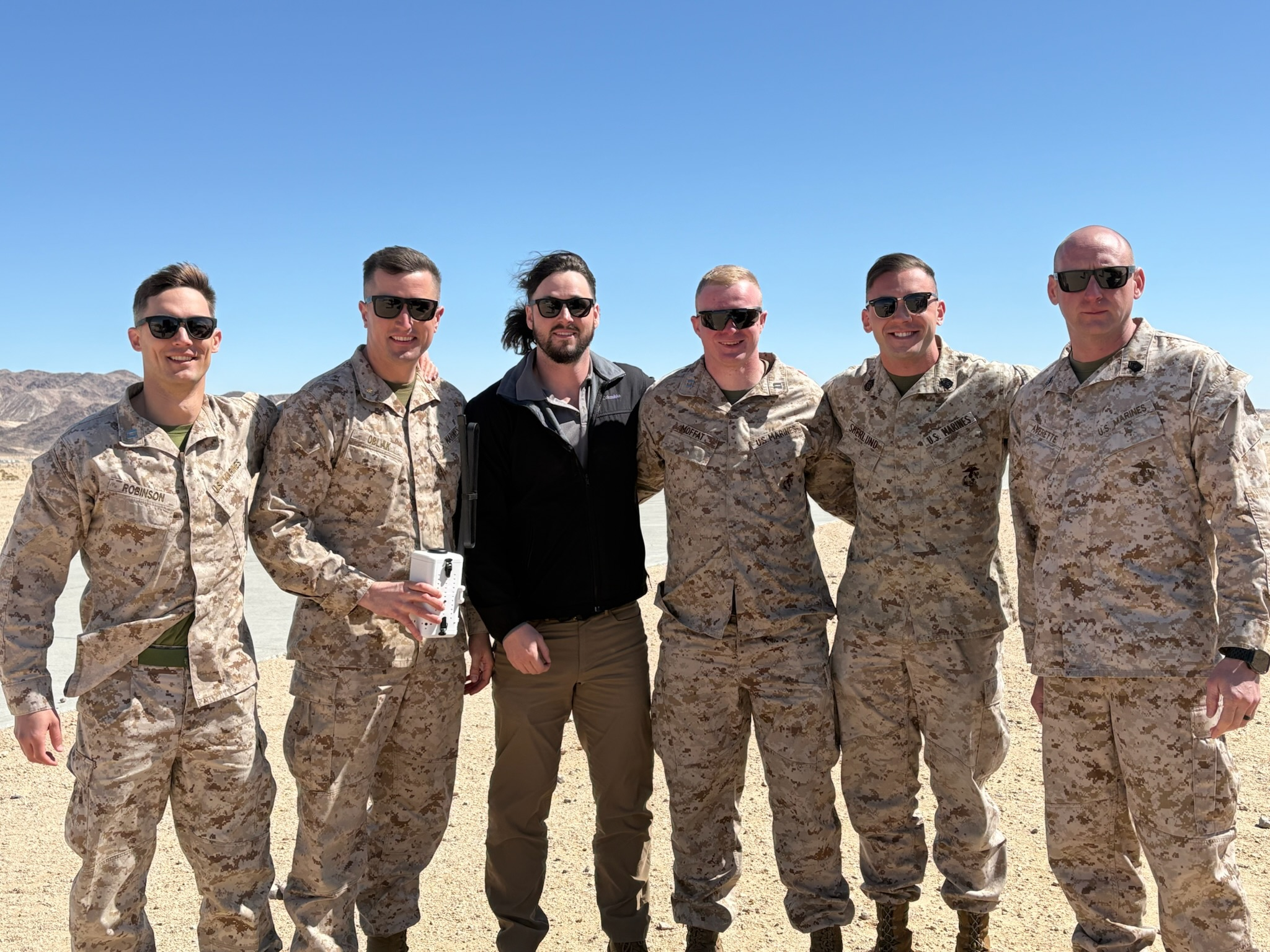
Thesis Originator / Stakeholder Sponsor
Software Engineer
Software Engineer
Software Engineer
Product Manager
I led AeroT from thesis concept to field-tested MVP, shaping the product and engineering direction across the RF sensing device, instructor map interface, low-bandwidth radio messaging, terrain-based signal modeling, ATAK field integration, and live validation. Our work turned an open-ended research idea into a usable training system that helped instructors show Marines, in near real time, whether their transmissions could be detected by simulated adversarial receivers.


Marine instructors teaching electromagnetic discipline during live training had no way to show students the tactical consequence of a transmission while the lesson was still fresh. Feedback often took up to 48 hours, so students had already moved on before they understood whether their radio activity would have been detected by an adversary.
Make the invisible electromagnetic battlefield visible in the moment by capturing live RF activity, modeling how it carries across terrain, and showing students whether an adversary could have seen them before the training moved on.
Thesis concept, users, and field constraints
Major Oblak's thesis asked whether inexpensive RF hardware could capture live signal activity, reconstruct it inside a virtual training environment, and show whether a student transmission would likely be detected by adversarial receivers.
The core problem was feedback latency. Instructors could teach EM discipline, but they could not reliably show a student, within the same training moment, that a transmission would likely have been seen by an adversarial receiver.
We split the product by operational boundary: a field device that collected RF activity, a Command View that configured devices and ran command-node analysis, and an ATAK workflow backed by MobileService for instructors standing in the field.
Raspberry Pi 5, SDRs, GPS, health telemetry, local persistence, XBee transport, and hotspot support.
React and MapLibre command-node app receiving devices, health, captures, heatmaps, receiver links, and event timeline.
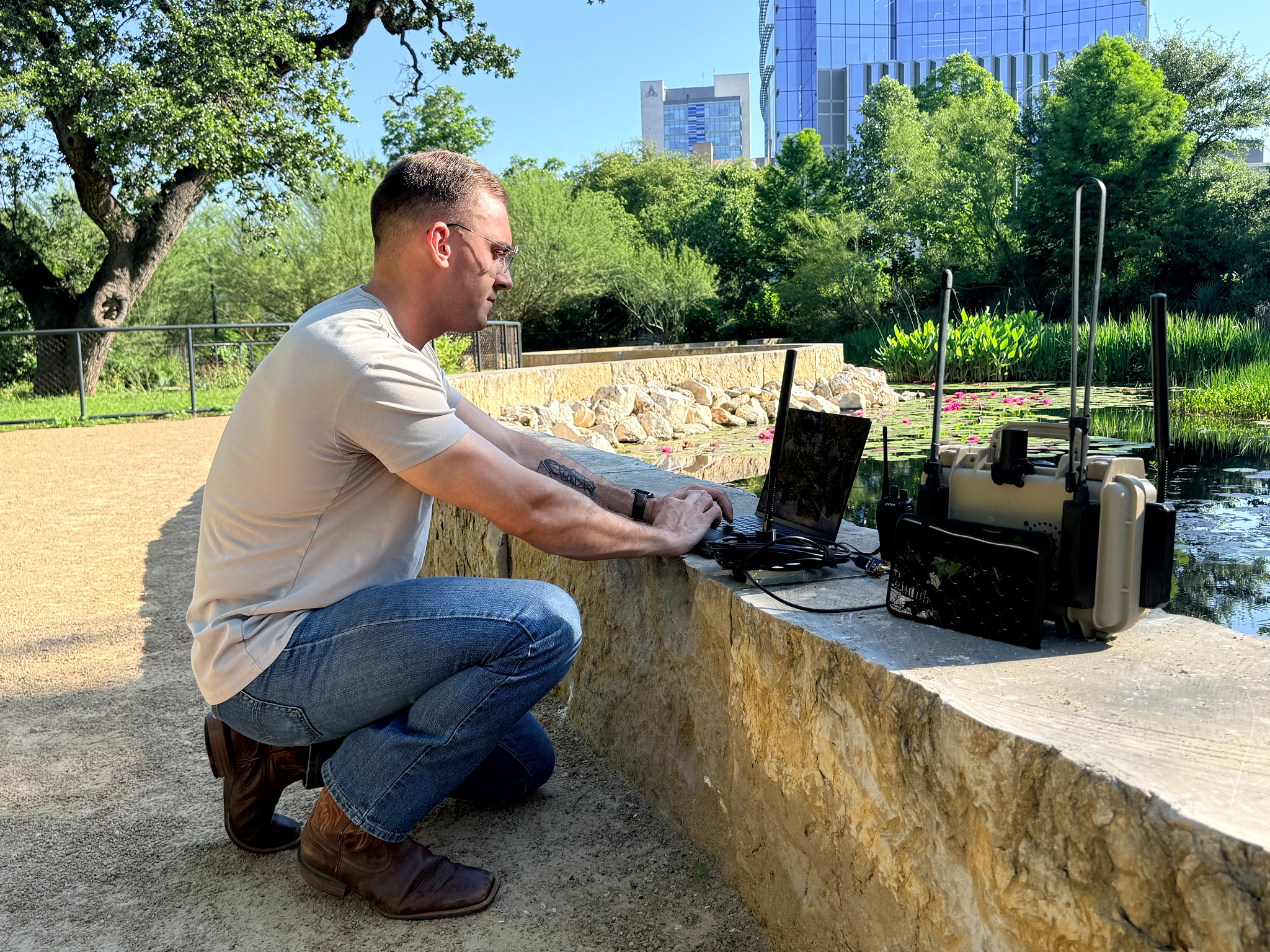
ATAK-native plugin backed by on-device APIs so field instructors could view analysis without moving heatmaps over low-bandwidth radio.
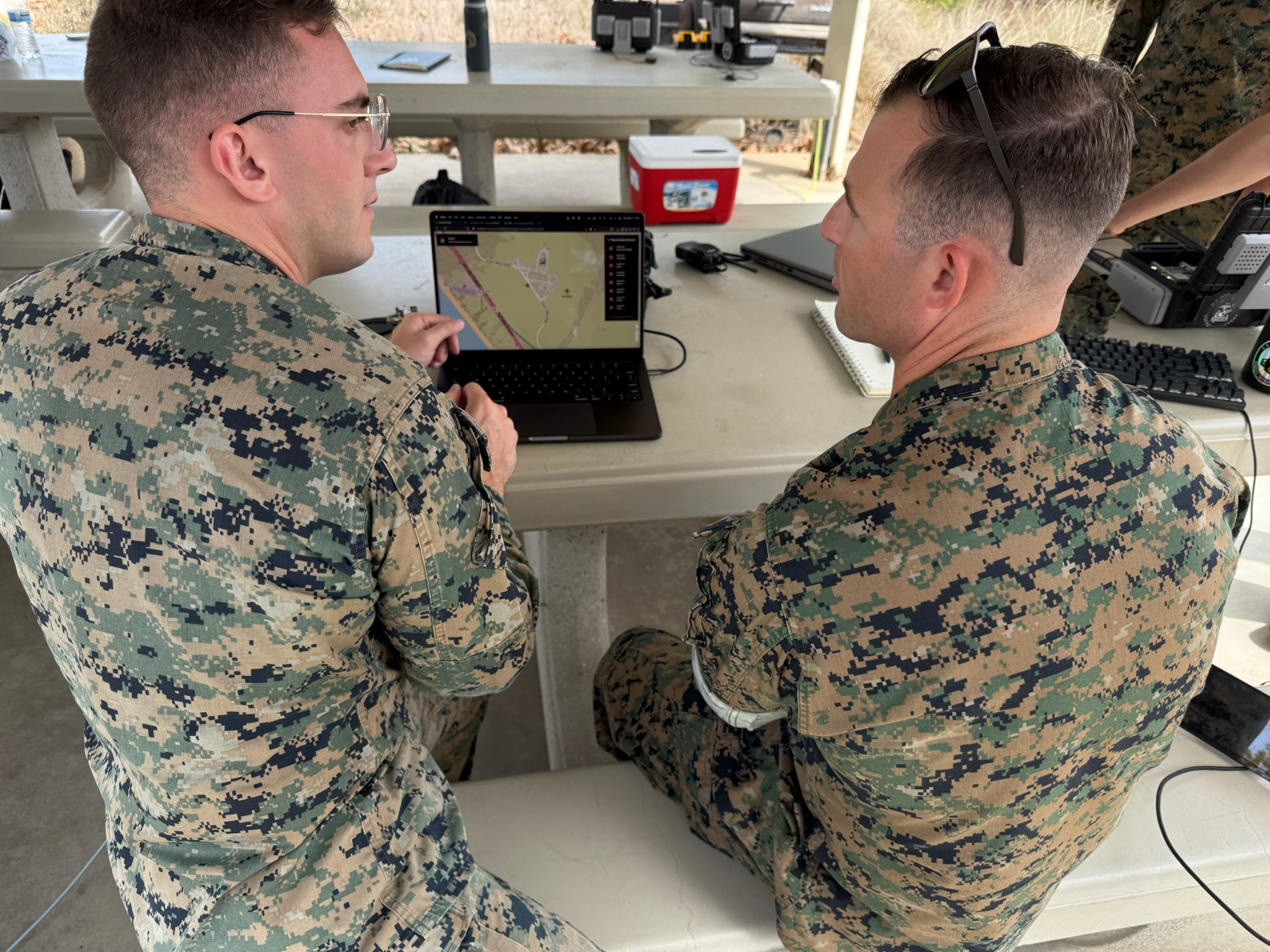
We believed off-the-shelf RF hardware could help instructors show students whether a simulated enemy receiver was likely to detect their transmission, while training was still happening.
At 29 Palms, we connected ten devices across roughly ten miles and delivered feedback within about five seconds of capture. Instructors could walk over to students and show them which simulated enemy receivers were likely to detect their transmission.
Prove the device and Command View slice
Narrowband RTL-SDR collection, early LillyGo LoRa transport, baseline collection, GPS, telemetry, command configuration, and a first map-centered instructor UI.
The final validation connected ten AeroT devices across roughly ten miles of 29 Palms terrain with ATAK clients in instructors' hands and Command View running at the command node. Signal feedback arrived within about five seconds of capture.
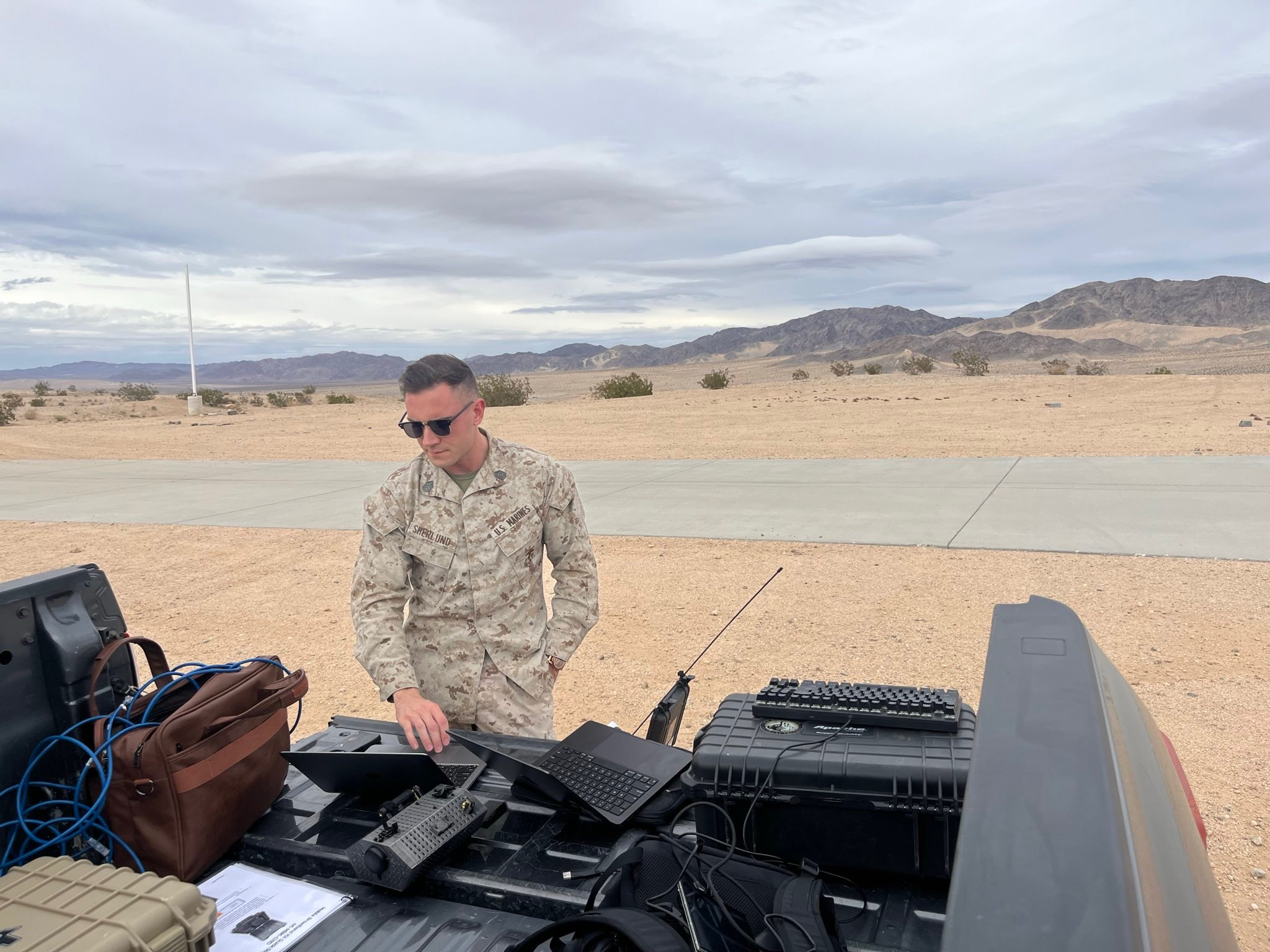
Power regulation, airflow, USB behavior, antenna placement, and enclosure choices directly affected collection reliability.
Compact signal messages could move over XBee, but ATAK heatmaps needed local Wi-Fi and on-device analysis.
Configured transmit power kept the product truthful about what a passive receiver can and cannot infer.
AeroT succeeded because we kept the architecture modular, the message contracts explicit, and the product goal narrow enough to validate in the field.
The work was not just writing services. It was keeping a hardware, software, RF, geospatial, and training system coherent while every constraint was moving.
The smallest field-validatable behavior became the whole point: detect a relevant signal, model adversary detectability against terrain, and show the instructor fast enough to change the student's behavior.